Cryotherapy Guide
Best Cryotherapy in London
Whole-body cryotherapy has become one of London’s most popular recovery treatments. This guide explores London’s leading cryotherapy venues, explains how cryotherapy works, and examines what current research says about its benefits, limitations and best use cases.
Focus
Cold-air recovery
Format
Evidence-led guide
Source
7 live listings
Cryotherapy is a short, supervised cold-air exposure used by many people as a recovery tool.
Whole-body cryotherapy usually means standing in a specialist chamber or cabin cooled far below normal environmental temperatures, commonly for only a few minutes. Unlike a cold plunge, the stressor is dry cold air rather than water immersion, so the session can feel cleaner, shorter and more controlled.
People commonly use cryotherapy for perceived soreness, post-training recovery, competition blocks, fatigue management and as a structured cold-exposure appointment.
Featured venues
Compare cryotherapy venues.
01
Marylebone · Central London
Rebase Recovery
- Services
- Cryotherapy · Hyperbaric Oxygen Therapy · Cold Plunge · Infrared Sauna
- Location
- Marylebone · Central London
02
Kensington · West London
Repose Space
- Services
- Wellness Club · Cryotherapy · Infrared Sauna · Red Light Therapy
- Location
- Kensington · West London
03
St John's Wood · North London
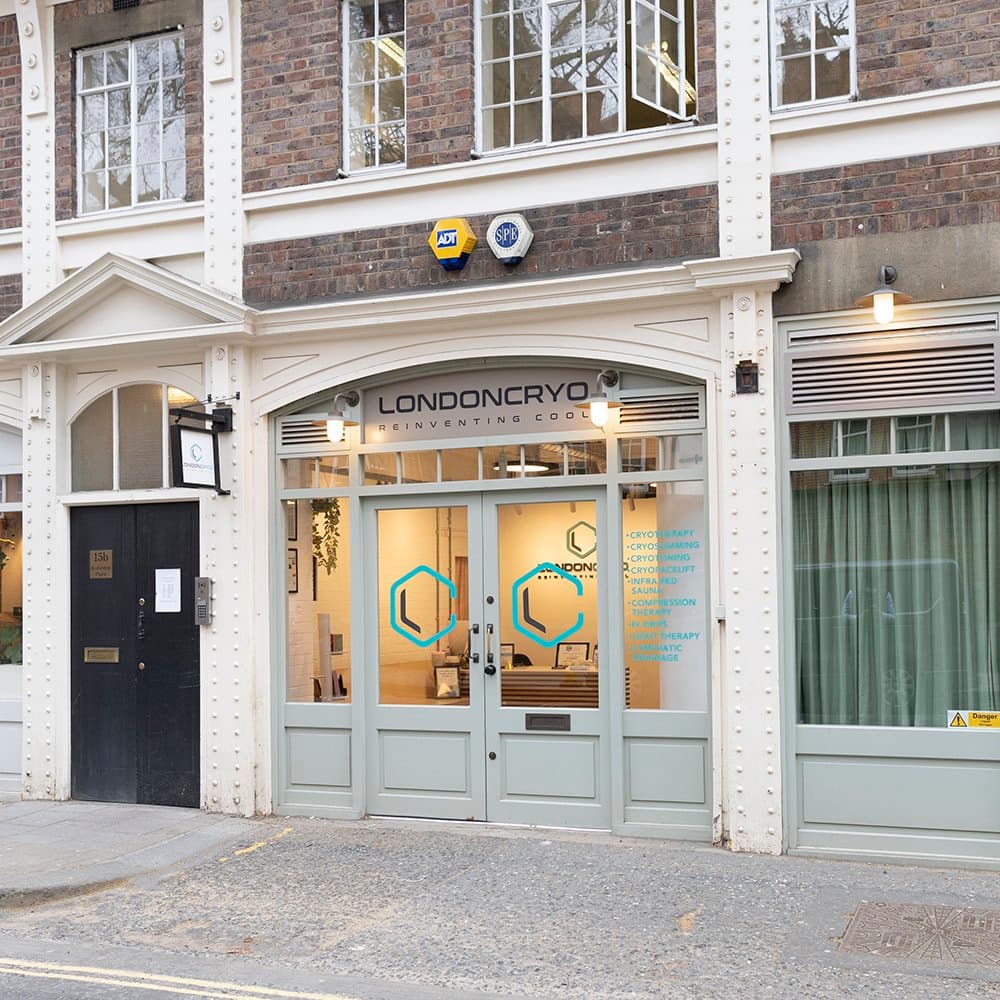
London Cryo — St John's Wood
- Services
- Cryotherapy · Infrared Sauna · Red Light Therapy · Hyperbaric Oxygen Therapy
- Location
- St John's Wood · North London
04
Canary Wharf · East London
Third Space Canary Wharf
- Services
- Gym / Performance · Sauna · Spa / Bathhouse · Cryotherapy
- Location
- Canary Wharf · East London
05
Belgravia · Central London
London Cryo — Belgravia
- Services
- Cryotherapy · Infrared Sauna · Red Light Therapy · Hyperbaric Oxygen Therapy
- Location
- Belgravia · Central London
06
Chelsea · West London
HUM2N
- Services
- Other · Diagnostics · Hyperbaric Oxygen Therapy · Cryotherapy
- Location
- Chelsea · West London
07
Mayfair · Central London
Lanserhof at The Arts Club
- Services
- Wellness Club · Physiotherapy · Diagnostics · MRI / Medical Imaging
- Location
- Mayfair · Central London
Cryotherapy vs cold plunge
Two forms of cold, different rituals.
What the research says
Useful signals, not miracle claims.
Evidence Supported
Recovery may feel easier.
- — Reduced perceived soreness
- — Improved subjective recovery
- — Help managing discomfort after intense exercise
Mixed Evidence
Bigger claims need caution.
- — Performance enhancement
- — Metabolism
- — Fat loss
- — Longevity
- — Immune function
Emerging Research
The category is still developing.
- — Protocols vary
- — Individual response differs
- — Use case matters more than blanket promises
When cryotherapy may be helpful
Use it when recovery speed matters.
Competition Recovery
Cryotherapy may be useful between events or high-output sessions when the goal is to feel ready again quickly rather than to maximise a single adaptation signal.
High Training Volume
For athletes or committed exercisers stacking frequent sessions, the value may be practical: maintaining training consistency when soreness and fatigue would otherwise interrupt the week.
Soreness Management
When delayed-onset soreness is the limiting factor, a short cold-air session can be considered as one recovery tool alongside sleep, nutrition, load management and mobility.
When to be more selective
The important nuance: recovery is not always adaptation.
Immediately After Strength Training
Inflammation is part of the adaptation process. Adaptation and recovery are not the same thing, and frequent cold exposure immediately after lifting may blunt some hypertrophy-related signals.
If Muscle Growth Is Your Goal
Some evidence suggests routine post-lifting cold exposure may reduce muscle growth adaptation. Strategic use away from key strength sessions may be preferable to automatic use after every lift.
Recovery vs Adaptation
The balanced view: cryotherapy can help you feel recovered, but feeling recovered is not always identical to giving the body the strongest possible signal to adapt.
Is cryotherapy safe?
Cryotherapy is generally considered safe when administered correctly by trained staff with appropriate screening. It is not suitable for everyone, including some people with cardiovascular, circulatory, neurological or cold-sensitivity conditions. This guide is informational and not medical advice; speak to a qualified clinician if you are unsure.
What does it cost in London?
Single cryotherapy sessions in London commonly sit around £30–£70. Memberships, packs and recovery-club bundles can reduce the effective session price or combine cryotherapy with other services.
Where to go next
Compare the live cryotherapy directory, contrast therapy, broader recovery spaces, sauna and cold plunge guides, and the Well+ sauna editorial before building your routine.
FAQ
What does cryotherapy do?+
Cryotherapy exposes the body, or a targeted area, to very cold air for a short period. People commonly use it for soreness management, subjective recovery and a quick cold-exposure reset.
Is cryotherapy better than a cold plunge?+
Not universally. Cryotherapy uses dry cold air and is usually shorter; cold plunge uses water immersion and often forms part of sauna or contrast therapy. The better option depends on the experience and outcome you want.
How long should a cryotherapy session last?+
Whole-body cryotherapy sessions are typically brief, often around two to four minutes, and should follow the venue's protocol and screening process.
Can cryotherapy help recovery?+
It may help some people reduce perceived soreness and improve subjective recovery after intense exercise, though the strength of evidence depends on the outcome being measured.
Should I use cryotherapy after weight training?+
If muscle growth is the main goal, be selective. Routine cold exposure immediately after lifting may interfere with some adaptation signals, so consider timing it away from key hypertrophy sessions.
How much does cryotherapy cost in London?+
A single London cryotherapy session commonly costs around £30–£70, with memberships and bundles often reducing the per-session price.